
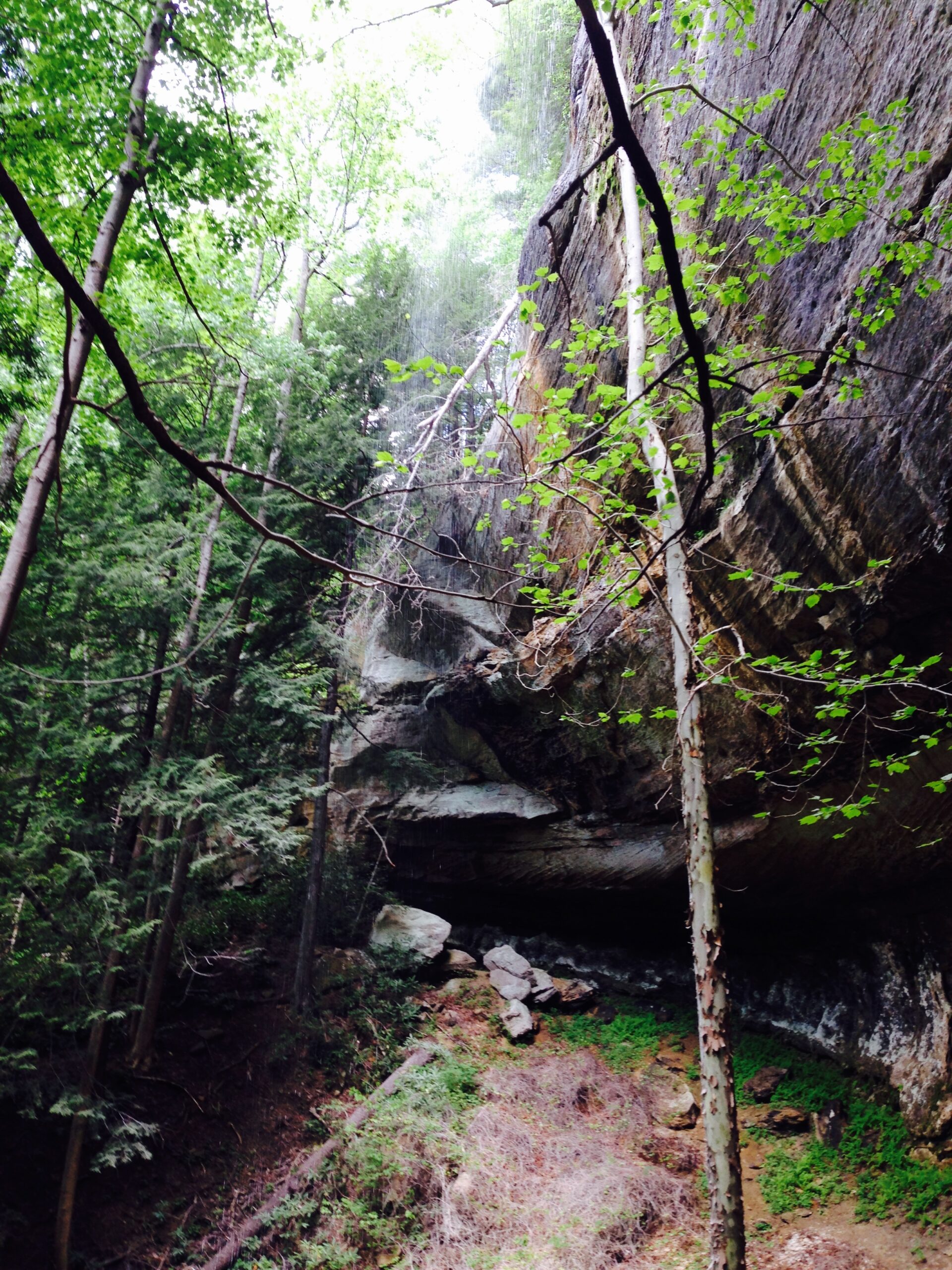
There is a window every year when Red River Gorge becomes genuinely hard to believe. The sandstone cliffs go orange. The oaks go gold. The sourwood and black gum light up red against the grey rock walls, and the whole gorge looks like someone turned a dial labeled Dramatic all the way up. That window is fall, and it is not as long as you think.
This guide covers everything you need to plan a Red River Gorge fall foliage trip: when peak color actually arrives, which trails put you in the best position to see it, where to eat and explore when you are off the trail, and what to pack so the trip lives up to the hype.
When Does Fall Foliage Peak at Red River Gorge?
Peak fall color at Red River Gorge typically falls between mid-October and early November, with the single best week most often landing around the third week of October. Color starts creeping in at the higher elevations in late September and works its way down through the gorge through October. By early November the leaves are falling more than they are turning, and the window closes fast.
A few things worth knowing before you lock in dates. Color varies year to year depending on summer rainfall and early-fall temperatures. A dry, warm summer followed by cool (not freezing) nights in September tends to produce the most vivid color. The Gorge sits at roughly 700 to 1,100 feet elevation, which means color arrives a bit later here than it does in the mountains farther south, but it is no less dramatic.
The practical upside: if you cannot make it during peak week, the shoulder weeks on either side are genuinely beautiful and considerably easier to navigate. Late September brings early color and almost no crowds. The first two weeks of November are underrated for the bare-canopy views that open up across the ridgelines once the leaves drop.
The Best Hikes for Fall Color at Red River Gorge
Not every trail in the Gorge gives you the same show. The trails that put you on ridgelines and overlooks are the ones that pay off most in fall, because you are looking into the color rather than walking through it at eye level. Here is how to match the trail to your experience level and what you want to see.
Auxier Ridge and Courthouse Rock (Moderate to Strenuous, 5.9 to 6.5 miles)
This is the fall foliage trail. The Auxier Ridge route puts you on an exposed sandstone ridgeline with unobstructed views in multiple directions, which in mid-October means you are looking out over a sea of orange and red canopy broken by cliff faces. It is one of the best views in the Daniel Boone National Forest, full stop. The approach through the forest is straightforward, but the ridgeline section is exposed and the footing on the sandstone can be slick after rain. Bring water, wear real shoes, and turn around if the weather shifts.
Gray’s Arch (Moderate, 3.4 miles out and back)
Gray’s Arch is one of the most visited arches in the Gorge, and fall is when the approach trail earns its keep. The forest floor goes gold around the arch and the light filtering through the canopy in the morning is worth waking up early for. The trail starts relatively flat through the forest before a steeper push near the arch. You can extend this into a longer Rough Trail loop if you have the legs for it, but the Rough Trail lives up to its name: steep, rocky, and not casual.
Natural Bridge (Easy, short climb to the arch)
The 78-foot sandstone arch at Natural Bridge State Resort Park is the Gorge’s most iconic landmark, and it reads differently in every season. In fall the surrounding forest turns and the arch frames the color like a painting. The Original Trail is a short, steady climb that almost anyone can handle. If the climb is not in the cards, a seasonal Sky Lift (running roughly April through November) carries you to the top. The park gets busy on fall weekends, so an early start earns you both parking and solitude.
Whittleton Arch (Easy, 2.6 miles round trip)
Whittleton is the quiet option. Most visitors head straight for the marquee trails and miss this one, which means the creek-side walk through the hardwood forest is peaceful even on a busy fall weekend. The arch itself is a worthwhile payoff for modest effort, and the gentle terrain makes it a good choice if you are bringing kids or want a lower-key morning before an afternoon adventure.
Rock Bridge Loop (Easy, about 1.5 miles)
The Rock Bridge Loop passes two of the Gorge’s most photogenic features: Creation Falls and Rock Bridge, the only arch in the Gorge with a stream running beneath it. In fall the creek reflects the color overhead and the light through the canopy is exceptional in the morning. This is a great warm-up hike or a standalone outing when time is short.
Where to Eat After a Day on the Trail
The area around Red River Gorge has more good food than most visitors expect. A few honest recommendations across different styles.
Sky Bridge Station is one of the most interesting stops in the area: a restaurant, tap house, and gear shop in one spot, with gourmet hot dogs and quesadillas alongside roughly a dozen Kentucky microbrews on tap. Red Point BBQ and Thatcher Barbecue Company both serve the kind of slow-smoked food that makes sense after a long day on a trail. Thatcher, opened in 2021 by Shawn and Crystal Thatcher in Slade, is a newer spot worth seeking out. Miguel’s Pizza has been feeding climbers since 1984, and the made-to-order pies after a full day of hiking hit exactly how you want them to.
For something different, La Cabana does authentic Mexican well, and 145 Roadhouse in Campton is worth the short drive for bourbon burgers, smoked meats, and live music on weekends. Most spots in the area keep seasonal hours, so it is worth checking ahead before making a long drive for a specific place.
Beyond the Trails: What Else to Do in Fall
Fall is climbing season in the Gorge just as much as it is foliage season. The cooler temperatures are ideal for sport climbing, and Muir Valley is one of the premier destinations in the country for it. The privately owned preserve run by the nonprofit Friends of Muir Valley has over 30 climbing walls and is free to climb, though there is a $15 per vehicle daily parking fee that goes directly toward trail and wall maintenance. It is worth every dollar.
Gorge Underground runs guided kayak and paddleboard tours through a flooded abandoned limestone mine in Slade. The experience is genuinely unlike anything else in the region: glass-bottom kayak options, neon-lit water, and an eerie calm underground that makes for a memorable contrast to a morning on the ridgelines. Tours are about an hour and fill up fast in busy season, so booking ahead is a good idea.
Mushroom Grove Shopping Village is a nice browse between adventures: roughly 14 small shops along an elevated boardwalk, including outdoor outfitters, handmade gifts, and local sweets. Raven’s Crest Outfitters and Gorge Outdoor Collective are both worth a look for gear, hats, and local merch.
What to Pack for a Fall Trip to the Gorge
Fall in eastern Kentucky can be genuinely cold at night even when the afternoons are warm. Morning temperatures in October regularly dip into the 40s, and the ridgelines and overlooks are exposed to wind. The general rule: dress in layers you can shed as the day warms up, and always carry more water than you think you need.
A few things that make a real difference on fall trails in the Gorge: waterproof boots or trail shoes with good grip (wet leaves on sandstone are slippery), trekking poles if you plan to tackle anything with scrambling sections, and a headlamp if there is any chance your hike runs long. Sunset comes earlier in October than most people plan for.
For overlooks and ridgelines, a light packable jacket handles the wind. The mornings are the best time to be on trail in fall, which means starting earlier than feels comfortable, so packing the night before is not a bad idea.
Where to Stay: Make the Most of the Weekend
A fall foliage weekend in the Gorge deserves more than a rushed day trip. The color is better in the early morning before the crowds arrive, the sunsets over the canopy from the right perch are worth staying for, and the drive back after dark on winding two-lane roads is not how you want the trip to end.
Staying in the trees puts you inside the experience rather than driving to it. At Vacation Alchemist, our two treetop cabins sit perched above the canopy in Rogers, Kentucky, about 10 minutes from the main Gorge trailheads. In fall, the view from the deck is something guests come back for year after year. There is a hot tub that makes considerably more sense after a long day on Auxier Ridge than anything else we can think of, a fire pit for the evenings, and a deck that faces the forest.
October weekends book early and the demand is real. If a fall trip is on your list, you can check dates and book directly at Vacation Alchemist, with no platform fees and a direct line to us for anything you need before, during, or after your stay.
Frequently Asked Questions
When is peak fall foliage at Red River Gorge?
Peak color typically falls in the third week of October, with color beginning to develop at higher elevations in late September. The window for peak color is usually one to two weeks, and it varies by year depending on summer rainfall and fall temperatures.
What is the best hike for fall foliage views at Red River Gorge?
Auxier Ridge offers the most expansive ridgeline views and is widely considered the best fall foliage hike in the Gorge. Gray’s Arch and Natural Bridge are also excellent, with the arch framing the surrounding color from above. All three offer distinct experiences worth planning around.
Is Red River Gorge crowded in the fall?
Fall is the busiest season in the Gorge, particularly on October weekends. Trails like Auxier Ridge and Natural Bridge see heavy traffic. Starting early (on the trail by 8am) is the most reliable way to get parking and a quieter experience. Weekdays are dramatically less crowded than weekends.
How far is Red River Gorge from Lexington?
Red River Gorge is roughly one to one and a quarter hours southeast of Lexington, Kentucky via the Mountain Parkway. It is a straightforward drive with no major navigation challenges.
Do I need a permit to hike at Red River Gorge in the fall?
Most trails in the Daniel Boone National Forest require no permit. Muir Valley, the premier sport-climbing preserve, is free to climb but charges a $15 per vehicle daily parking fee that goes toward preserve maintenance. Natural Bridge State Resort Park may have a parking or entrance fee depending on the activity. Always check with the specific trail or area before you go, as details can change seasonally.